
In less than a week’s time the final part of Queen Elizabeth’s 90th birthday celebrations will come to an end.
On 10th June other members of the Royal Family will join the Queen in a National Service of Thanksgiving at St Paul’s Cathedral and on the 11th June the spectacular Queen’s Birthday Parade otherwise known as Trooping the Colour takes place.
We are continuing with our tribute by looking at lighting during the Queen’s lifetime and this article covers the period from the 1980’s to the present time.
 For the first time in history the UK now had a female monarch and a female Prime Minister in Margaret Thatcher. This was a time of re-building and change for the country with business and the economy very much to the fore. The business-like approach was reflected in both the décor and lighting in the 1980’s and this era has somewhat unkindly been dubbed the ‘Ugly 80’s’. Gone was the pine furniture and Laura Ashley ‘country look’ from the 60’s and 70’s to be replaced by black ash furniture combined with muted greys and often teamed with stark white contemporary light fittings. Pendant lamps became hugely popular for hanging over dining and kitchen tables and for lighting over kitchen islands and breakfast bars. Glass globe pendants were an iconic style statement and would have been seen hanging in many a living room. Pendant lights were produced in their hundreds and as they are both practical and decorative they continue to be just as popular today. Art Deco lighting inspired by modern geometric shapes made a comeback in the 1980’s and again this trend has continued to the present day. Following the energy crisis of the 1970’s the search was on for more energy efficient methods of lighting, although it was some years before we were to see any significant changes. In 1986 the Queen took part in celebrations to mark her 60th birthday.
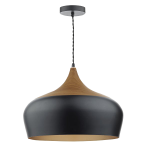
The 1990’s were all about a slowing down from the fast and frenetic pace of the 1980’s for we were now entering the grips of recession. There was a general scaling down and getting back to basics and this was reflected in interiors which were now calmer and more soothing. Minimalist lighting that focused on basic raw materials combined with textural elements in simple sleek designs were the order of the day. This simpler approach was epitomised in Scandinavian or Nordic style lighting which featured a modern take on the country style yet with a fresh clean and uncluttered look so typical of the 1990’s. Industrial style lighting with its robust utilitarian look also began making its mark in the 90’s. Energy efficient bulbs were now being introduced but they were initially unpopular as they produced a cold harsh light far removed from the more yellow glow we were used to. The 1990’s saw the development of blue, white and super bright LED’s but it was not until the 2000’s that they were used in general household lighting. In 1997 The Queen and the Duke of Edinburgh celebrated their Golden Wedding.
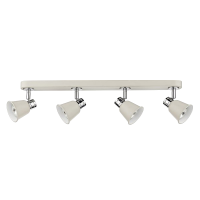 The early 2000’s marked a time of personal sadness for The Queen as her sister Princess Margaret died in early 2002 to be followed only a few weeks later by The Queen Mother. Despite this The Queen continued with her duties and began a programme of events to mark her Golden Jubilee. Later in 2006 she celebrated her 80th birthday. The casual, comfortable look to our interiors continued into the 2000’s with basic neutral colours being updated with bright coloured accessories such as cushions and table lamps. Mid-century lighting, taking inspiration from designs of the 1950’s, 1960’s and 1970’s, was being up-dated for the modern 21st century and was proving very popular. Our kitchens were now being lit with track lighting and spotlight bars along with pendant lights hung over tables and kitchen islands and concealed lighting under our kitchen cabinets. Recessed downlights were popular for open plan living areas as they created a sleek low profile look. We could even add chandeliers to our bathrooms for a truly glamorous look if we wished. In 2009 we started the phasing out of inefficient light bulbs in favour of more energy efficient alternatives – a process that is on-going to this day. Solar voltaic panels were introduced but they did not really take off until the 2010’s with the introduction of subsidies and feed-in tariffs.
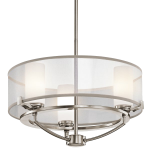
The last part of our journey takes us into the 2010’s. The Queens’s Diamond Jubilee was celebrated in 2012 with a spectacular weekend of events in London and a series of regional tours. The hugely successful London Olympics was opened by The Queen in 2012 and in 2013 the Duke and Duchess or Cambridge welcomed their first child Prince George who is third in line to succeed his great grandmother The Queen. In 2015 The Queen became our longest serving monarch, surpassing the reign of her great- great grandmother, Queen Victoria and is the world’s oldest monarch. Today in the 2010’s we are surrounded by a myriad of different styles and trends and it is pretty much a case of anything goes. Many of our light fittings today are inspired by the past – Art Deco, retro, mid-century and industrial designs abound and more than ever we are having the courage to mix contemporary and vintage styles together. We can now select from a huge range of low energy and LED bulbs and solar panels can be seen on roofs up and down the country. LED is definitely the way forward in lighting with many lights now being designed with integral LED bulbs.
We hope you have enjoyed our look back at lighting during the Queen’s lifetime. When she was just 21, almost 5 years before she became Queen, she promised that ‘… my whole life, whether it be long or short, shall be devoted to your service …’ The Queen has seen a great many changes over her lifetime and has remained a constant presence in lives of the people of the UK and Commonwealth and I think no-one could disagree that she has indeed kept her promise made all those years ago.