
Colonial lighting has a refined elegance and touch of formality that is perfect for traditional interiors. In this blog we will be looking back to see how this style evolved and showing you how easy it is to add nostalgic Colonial style light fittings into period homes.
The Colonial style can trace its origins back to the days of the British Empire. As early as the late 16th century the British established colonies in America and the West Indies. Fueled by a demand for sugar, tobacco, tea, coffee and spices, trading posts and plantations were established. In the 19th century during the second wave of Empire building, the British Empire expanded to include India, large parts of Africa and Asia along with other territories throughout the world. At its heyday in the early 20th century it had become the largest Empire the world had known, comprising about one quarter of the world’s population.

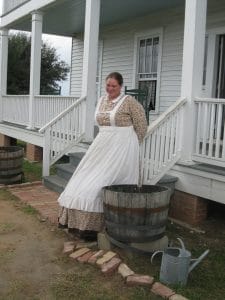
The Raffles Hotel in Singapore exemplifies colonial elegance. This luxury hotel first opened its doors in 1887 and has a reputation for exceptional service which has, over the years, attracted many wealthy and famous clients. It is famed for Singapore Gin Sling which was invented by a local bartender working in the Long Bar at the hotel sometime around 1915. In sharp contrast a more modest but, nonetheless, still quite impressive, American colonial home is shown on the left.
Colonists travelling to all these far-flung destinations needed to travel light, but they were able to bring some furniture and furnishings from home. Much of what they took was traditional dark furniture and heavier fabrics that were the order of day back home in Georgian and Victorian Britain, but really quite unsuitable for the conditions in which they now found themselves. The travellers quickly learned to adapt to the often hot and humid climates and as a result the colonial style evolved to include a mix of local fabrics and furniture mixed with the ‘heavier’ items that reminded them of home. Light cane or rattan furniture would be teamed with tropical bamboo blinds and white walls, whilst the cabin trunks they brought with them to transport their china and clothes would double up as coffee tables. Lighter cottons and linens replaced the heavily upholstered fabrics. This well-travelled look is a key element in what has become known as the Colonial style.

This impressive hallway is located inside the ‘big house’ at the Oak Alley sugar cane plantation in Louisiana, USA. It was built in 1837. The hall has two large chandeliers which are supplemented by candelabra wall sconces and a 5 light multi-branched candlestick style table lamp.
Colonial interiors are comfortable with an air of formality, a look that sits well in traditional homes. To add a little bit of Colonial style to your home opt for lightweight fabrics with botanical, paisley or animal prints and intricately carved furniture made in teak or mahogany – for a lighter look cane and rattan works well. A well-stocked drinks cabinet was a must have accessory in affluent colonial homes and an antique or vintage cocktail cabinet will make a lovely addition to a larger formal room. Window shutters were so often a feature of colonial homes helping to overcome the heat and what tropical colonial house would have been without its ceiling fans. An eclectic mix of accessories along with some potted ferns and palms will add the finishing touches.

One of the bedrooms in the main house at the Oak Alley plantation is shown here. The two replica oil lamps are used as bedside table lights and the intricately carved bed posts are so typical of the colonial style. Pineapples were often used in carvings at that time as they were considered a symbol of welcome and luxury. Fresh pineapples were expensive and were given to guests in colonial America as a sign of friendship.
The original colonists would not have had the benefit of electricity and consequently any lighting fixtures and fittings in the earlier days would have been lit by candles and in later years they would also have used oil lamps. It is difficult for us to imagine just how dark homes would have been in those days and certainly in warmer tropical locations there was no firelight to supplement the candle power. Fortunately, for anyone who is restoring an older home today and wishes to embrace the graceful colonial style, there are a whole host of reproduction light fittings that can be used with modern electric light bulbs. Lighting that maintains the period heirloom feel but with all the benefits of today’s safety standards.
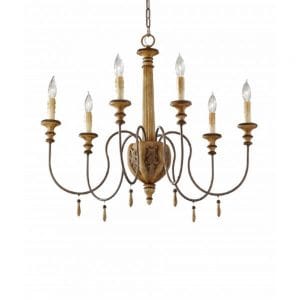
The large 6 light Annabelle chandelier is designed and manufactured in America for our Manhattan collection. Crafted in resin to create a carved wood effect that was typical so typical of the Colonial style. This is a large fitting with a drop of over 2 meters making it ideal for lighting in rooms with high ceilings which were another feature of colonial style homes. It makes a stunning entrance hall or stairwell light. The cream candle sleeves are designed to replicate the drips that would have occurred when wax candles were used.
To maintain authenticity the choice of metalwork is important – brass, wrought iron, pewter and gunmetal can all be formulated to recreate the soft patina associated with aged colonial metals. Colonial lighting dates back as far as Georgian times when light fittings would have been in polished or burnished brass, silver or wood with lots of arms and decorations including scrolls, shields and acanthus leaves. Chandeliers and wall sconces would have had open candles or candles enclosed by hurricane glass. The less well-to-do homes would have used simpler designs in unadorned metals and wood.

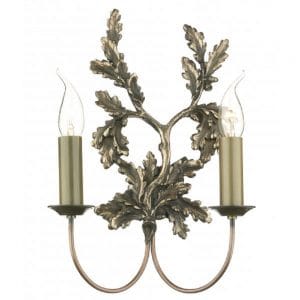
The large traditional 3 tier Flemish chandelier with its 15 candle style lights, shown on the left, will give an elegant touch of Colonial charm and is ideally suited to Georgian and Regency houses. Manufactured in the UK in the classic Flemish style in aged matt bronze metalwork that is very much in keeping. The Leaf double wall light on the right is another UK made light fitting. This graceful and stylish wall sconce is typical of lighting from the Georgian and Regency periods with its use of decorative leaves in an antique bronze finish.
Chandeliers were used in more formal Colonial sitting rooms and dining room or in hallways to create an impressive entrance. Many Colonial homes, particularly in warmer locations, had high ceilings designed to keep things cooler and these were ideal for showing off the finest chandeliers.
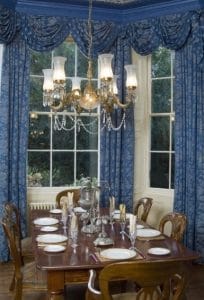

The aptly named Maharaja chandelier and matching candelabra table lamp shown here have a definite touch of the exotic Indian sub-continent. Lavish, flamboyant and richly decorated with mouth blown cut glass shades and dripping with glass bead chains and droplets. The glass shades have a pineapple pattern which was commonly used in Colonial homes as it was considered a symbol of good luck and used to welcome visitors. The range also includes smaller chandeliers and matching wall lights.
Lanterns were also a popular choice for lighting in entrance halls. Less formal lanterns were used in kitchens above central tables and countertops to provide as much light as was possible for food preparation.


Two simply designed rustic lanterns. The Larkin lantern on the right has an open feel with its old bronze finish frame creating a strong linear silhouette. The Strathmore hanging lantern, on the left, is a faithful reproduction of a period lantern from the Georgian era. It has a simple hand crafted appearance and is made in solid brass which has been given an aged greyish bronze finish that looks as if it has been tarnished for years. Ideal for adding a little rustic colonial appeal to less formal areas.
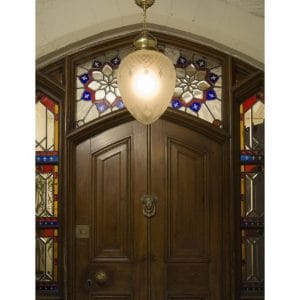

These two more formal hall lanterns are perfect for smaller entrance hallways. The Ottoman, on the right, has a beautiful hand made glass shade which is etched with an attractive pineapple pattern as a symbol of welcome for visiting guests. It is available to order in a choice of metal finishes. The traditional Georgian bell jar hall lantern on the right has a clear glass shade on an antique fitting. Bell jar lanterns such as this were often used in entrance hallways and were designed to stop the candles being blow out when the door was opened. Luckily this is not an issue for us today and all these lanterns will give a good level of light whenever it is needed.
Schoolhouse style ceiling lights and pendants are very much in keeping with the Colonial style. They are based on light fittings that were originally used in school houses in Victorian and Edwardian times. Designed to be practical and tasteful whilst evoking affectionate childhood memories of a simpler past.

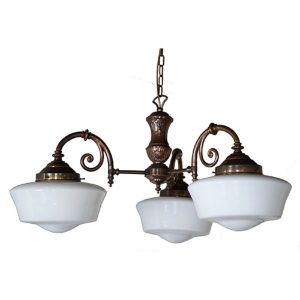
Two traditional vintage school house ceiling lights. The Keller pendant, shown right, has a nostalgic understated elegance and is ideal for using over kitchen tables. It is a versatile fitting with a dual mount option that allows it to be used as a hanging pendant or fitted in semi-flush mode for lower height ceilings. The soft opal glass shade gives a lovely diffused ambient light. The larger Clones 3 light chandelier style ceiling light has a quality solid brass frame in an aged antique finish with attractive decorative detailing and opal glass shades. Looks stunning in entrance hallways as an alternative to more traditional hall lanterns or chandeliers.
Table lamps were often used to supplement lighting in the evening and smaller candle holders were carried to light the way as you moved around the house. Bedside lights and table lamps with candlestick style bases or replica oil lamps would be very in keeping.
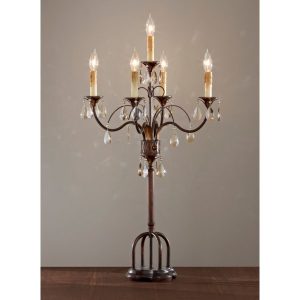
Finally, four very different table lamps that can be used to inject a touch of charismatic Colonial charm and personality. The beautiful Anora candelabra table lamp will add the perfect finishing touch to traditional rooms particularly if you have antique chandeliers. Candelabras and multi-branching candle holders have been around for many years providing extra candle power to light homes and workplaces. During Georgian, Regency and Victorian times they became more elaborate and decorative. This lavishly decorated Anora lamp has a dark walnut finish and is adorned with glamorous crystal droplets.
Philatelists will instantly recognise this delightful India table lamp as it takes its inspiration from a vintage Indian postage stamp. The porcelain base is hand finished with a turquoise and cream elephant stamp motif outlined in pale gold and is supplied complete with the box shaped ivory linen shade.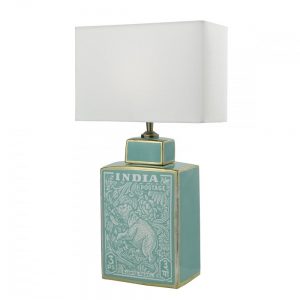
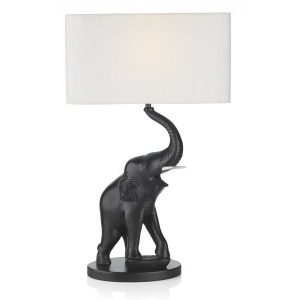
Staying with the Indian theme we have the Tantor black elephant table lamp made in the UK for our Artisan Lighting Collection. The lifelike black elephant complete with its ivory coloured tusks sits on a black base and has an ivory white silk shade.
The tall Park Ridge lamp has classic styling reminiscent of the old fashioned wooden turned table and floor lamps that were so popular during Victorian times. In a dark sienna brown finish with subtle silver leaf highlights to give an antique look. It comes complete with the biscuit coloured Shantung fabric shade. A classy looking table lamp with a definite Colonial feel.
As you have seen, Colonial style lighting incorporates lots of elements and ideas from Georgian, Regency, Victorian and Edwardian Britain mixed with the simpler American frontier style. As the colonial days of the Empire lasted such a long time there were many variations in the style of light fittings which allows a good deal of leeway in the choice of lighting to achieve the Colonial look.
All the lights featured in this blog, and many more, are available on the Bespoke Lights website – simply click here.