
LIGHTING IN HISTORIC PERIOD HOMES
Work is due to start in April this year on a 10 year refurbishment programme at Buckingham Palace. The Palace has served as the London family home of British sovereigns since 1837 and is also the working headquarters of the monarchy.

The site where the Palace stands can be traced back to the early 1600’s when James 1 established a plantation of mulberries for rearing silkworms in what is now the gardens. The original house on the site was demolished in 1703 when the Duke of Buckingham built Buckingham House. In 1761 the property and grounds were acquired by George 111 as a residence for his wife Queen Charlotte and their children and it became known as the Queens House. In the 1820’s Buckingham House underwent its palatial transformation when King George 1V employed architect John Nash to give it a royal renovation. Queen Victoria was the first monarch to adopt Buckingham Palace as her official residence and she oversaw the last major construction work adding the front wing including the iconic balcony which over the years has served as a focal point for many significant national celebrations.
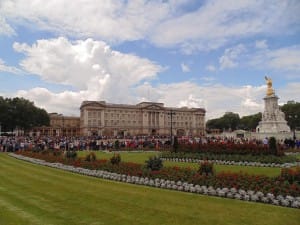
The planned refurbishment will be the biggest undertaken on the property since the alterations and repairs made in the 1950’s in the aftermath of WW2. Behind the scenes, away from the splendor of the magnificent state rooms, the Palace is beginning to show its age and is in need of a major overhaul. Essential maintenance work to renew the Palace’s 33 year old boilers, 100 miles of electrical cable and 20 miles of lead and cast iron pipework will be undertaken to help preserve the infra-structure of this historic building.
Once the most urgent repairs have been carried out further work will begin on each wing in turn, starting with the most famous front/east wing which faces The Mall. By phasing the work in this way, the Queen, Duke of Edinburgh and other members of the Royal Family will still be able to continue to live and work at the Palace and events such as investitures, garden parties, state visits and the changing of the guard will not be affected.
Electricity was first installed in the ballroom at Buckingham Palace back in 1883 and over the following four years was extended throughout the Palace.
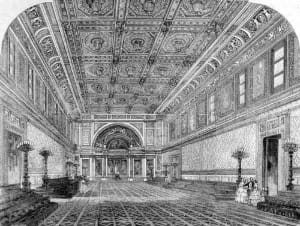
Today the Palace has 775 rooms which includes 19 state rooms (the ballroom shown above is the largest), 52 Royal and guest bedrooms, 188 staff bedrooms, 92 offices and 78 bathrooms and currently has around 40,000 light bulbs! During the renovations the Palace will be upgraded to provide a wiring system that is fit for the 21st century. In the process 330 distribution boards (fuse boxes), 5000 light fittings and 6500 electrical sockets will all be replaced. It is also proposed that solar panels will be fitted to inconspicuous parts of the roof which, in the long term, will result in a significant reduction to the running costs.
This is the time of year when many of us think about carrying out a few repairs or doing a spot of decorating in our own homes. Whilst we will probably not be considering anything on the scale of the Buckingham Palace renovations there are certainly lessons we can learn. Anyone who has an older property will know that it can be difficult to source lighting ranges that are suitable for historic and heritage buildings. Most lighting companies simply do not offer a made to measure, bespoke lighting service that will allow you to adapt and modify light fittings, or, if necessary, have lights especially designed and made.
PLANNING
This may sound boring but it really does pay to think the job through and get everything sorted before you make a start on any proposed re-decoration or refurbishment. Assess the current condition of the room or rooms you want to refurbish. Do you want to make any structural alterations or are there any issues such as damp that you want to address whilst you have the opportunity? Does the wiring need updating? Many older homes built during or before the 1960’s do not have an adequate earth cable, so it may be worth considering an electrical upgrade. If you do not have an earth cable you will need to select double insulated or Class 11 lights with two layers of insulation to protect the live parts. Whilst there are many more double insulated light fittings available today than there used to be, you may still not be able to find exactly what you want.
Think about the light levels you have in the room – do you need more or less light than you already have? Wall lights and picture lights are

great for adding a relaxed background light in living rooms and now would be a great opportunity to add the necessary wiring. Do you need any more sockets for additional table lamps or floor lights? It certainly pays to make these decisions before you start because once you have finished the decorating it’s too late!
Our simple lighting plan shown here sketches out the main features in the rooms and we have highlighted the areas successfully lit to ensure nothing has been overlooked.
PLANNING PERMISSION AND GRANTS
If you are carrying out significant alterations or you live in a listed property you may need to apply for planning permission or listed building consent. Applications can take several months and could influence what ultimately you do. Grants are few and far between these days but worth checking, particularly if you are introducing energy saving measures.
CALL IN THE PROFESSIONALS
If you are proposing any structural alterations it pays to seek professional help. Any electrical or plumbing work is also best left to the experts. Choose the right trades person by doing your homework – personal recommendations from friends and neighbours are useful. Try to pick a reputable, well established firm which belongs to the relevant trade associations and don’t be afraid to ask for references. If it is a big job get at least two quotes and be specific about exactly what you want done.
CHOOSING LIGHT FITTINGS
Finding the right light fittings for traditional homes and historic buildings is often a challenge. Search through the internet and you will find lots of lighting companies out there offering similar lights at similar prices, but if you are looking for quality reproduction lighting for period homes at reasonable prices your choice rapidly diminishes. Bespoke Lights sets out to offer something a little different. Yes, we have a great range of ‘off the peg’ lighting for traditional homes and our easy to use site allows you to select lights according to the age of your property.

Where we differ from other on-line lighting companies is that we realise one size does not necessarily fit all and this is why we offer our bespoke lighting service. This is a more personal service where our knowledgeable and friendly staff will work with you to source exactly what you are looking for and, if it cannot be found, we will work with our manufacturing partners to have it made for you.
RUNNING COSTS
The cost of running lights in larger homes can be significant and anything you can do to reduce the cost will be a bonus. LED lighting has come on in leaps and bounds over recent years and is definitely the way forward as we aim to reduce our carbon footprint and cut the soaring cost of energy bills. Lighting usually accounts for 40% of the average electricity bill and by simply changing only 1 of the 60 watt bulbs in your chandelier for an LED bulb could save in the region of £9 a year. Admittedly LED bulbs are a little more expensive to buy, but as they last around 25 times longer than a standard light bulb it is a win-win situation. Just imagine the cost saving for Buckingham Palace with their 40,000 bulbs! The LED and low energy bulbs that were first introduced were rather ugly, but nowadays they are nearly indistinguishable from the old incandescent bulbs so they will look just as good in your traditional chandeliers and period light fittings.
BUY BRITISH
British made light fittings are among the best in the world and Bespoke Lights do their utmost to source as many of our lights as possible from British manufacturers. By buying British lights you are getting a quality product and we are so confident that we have extended the electrical warranty on all our lights from 1 to 2 years. Unlike most light fittings bought from DIY stores and High Street shops we stock a range of spare parts for the lights we sell. If, for instance, you break one of the glass shades on a light fitting that you purchases form us, the chances are we should be able to get you a replacement.
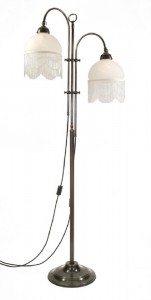
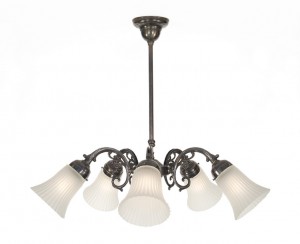
The 5 arm ceiling light and the standard lamp shown here are from our Period Lighting Collection which features classic British Made light fittings based on designs from the early days of electric lighting in the late Victorian and Edwardian periods. They are hand crafted out of solid brass with a genuine tarnish which is waxed and buffed to replicate restored antique fittings. Understated but simply exuding quality and refinement.
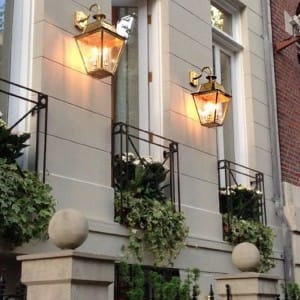
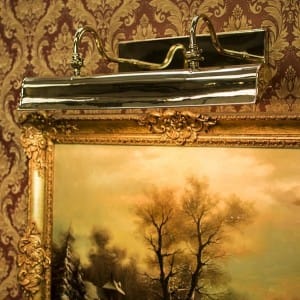
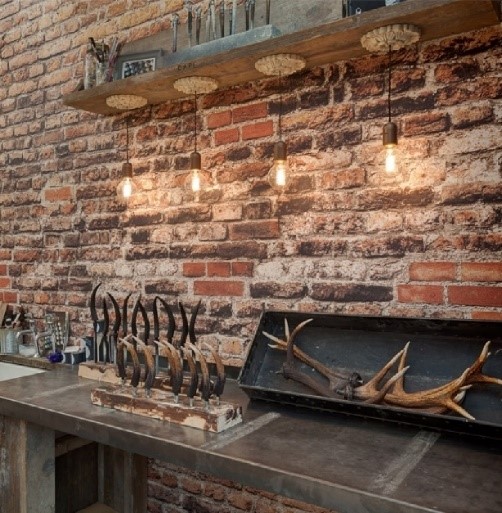

This selection above showcases the quality of British made light fittings. The large Balmoral outdoor wall lanterns and the trough picture light shown above are all made in solid brass. We often see paintings and pictures lit with picture lights in stately homes and art galleries but do think to do so in our own homes. This is a great shame as picture lights are wonderful for highlighting the detail, colour and beauty of art work as well as adding extra interest in a room.
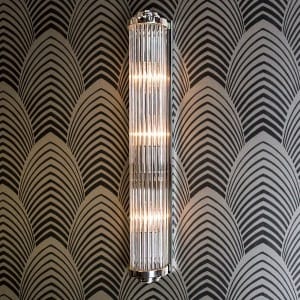
The aptly named Gatsby wall light above has a definite touch of Art Deco with its ribbed clear glass and nickel metal. Perfect for lighting in 1920’s and 1930’s homes and in Deco themed rooms.
Finally we could not finish this blog without making further reference to James 1 and his ill-fated attempt to establish a plantation of mulberry bushes in the grounds of what are now the gardens of Buckingham Palace. The King imported over ten thousand trees from all over Europe and required landowners to purchase and plant these mulberry trees in an attempt to break the French monopoly on silk making. Unfortunately James ordered black mulberry trees and not white ones which are the sole food of the silkworms. Fast forward a few hundred years and the royal association with mulberry trees continues today with the Queen holding the National Collection. The trees are planted throughout the gardens at the Palace.
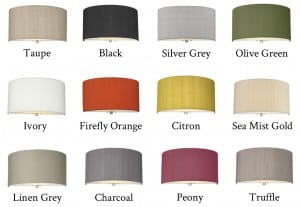
Silk fabric has been highly prized for centuries and is ideal for making lampshades – the perfect way to add a little affordable luxury to our interiors.